
6 reasons to become an eco-socialist in 2026
IN in 2026: Eco-socialism. Public power. Zohran's New York. Listicles. Subscribing to newsletters about clean energy.
OUT in 2026: Capitalism. Fossil fuels. Trump's America. AI-generated articles. Unsubscribing to newspapers owned by billionaires.
But before we pitch ourselves headfirst into 6 reasons to become an eco-socialist in 2026, let's get on the same page.
What is socialism?
Socialism means a lot of things to a lot of people. For me, it means that the whole point of having a government is to systematically address the needs of all people. All of 'em! Our government should provide high-quality affordable housing, health care, food, and energy to each and every one of us.
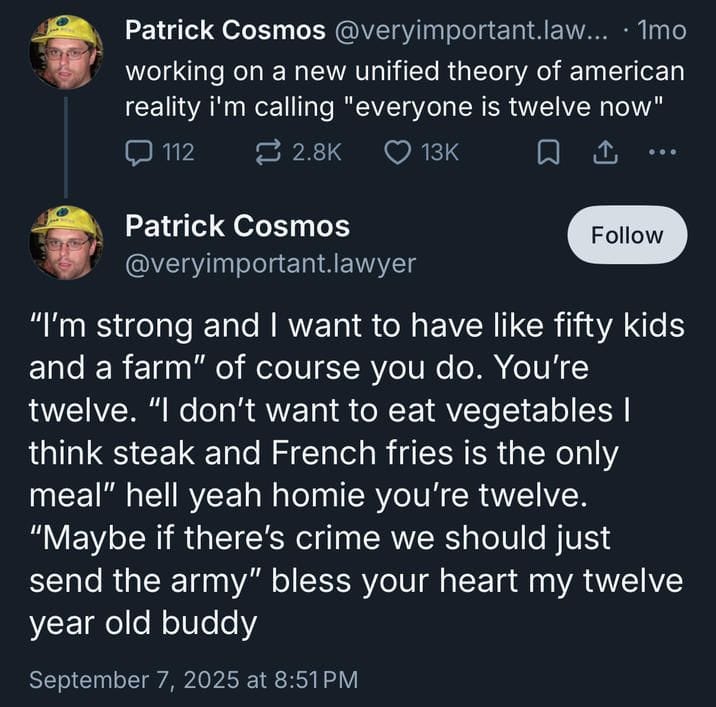
Socialism is sometimes dismissed as a child's fantasy of how the world ought to work. But I ask you, what's more childish? A government that takes care of people, or a government chock full of mental twelve-year-olds who'd rather watch the world burn than see everyone prosper?
What is eco-socialism?
Not a word I made up, actually! Eco-socialism (the hyphen's optional) dates back to at least the 1880s. The word resurfaced throughout the 20th century, notably in the work of Lefty darling Murray Bookchin. More recently, eco-socialism was endorsed by Pan Yue, the man credited with bringing climate change and decarbonization to the forefront of China's policy roadmap.
The "eco" in eco-socialism stands for ecology, which sees humans and nature as deeply interconnected and enmeshed—as opposed to separate and isolated. Humans famously came from nature and, in fact, have never left it.
By viewing the world through the lens of ecology, we can ask and answer tough questions, like Where does "culture" end and nature begin? And how does Capitalism exploit that boundary? Feel free to raise these Qs at your next socialist book club meeting.
A simple definition of eco-socialism
My personal definition: Eco-socialism is the belief that, as the dominant species on the planet, humans have an obligation to care for the natural world. And since we believe that humans are nature, the stewardship of all living things falls squarely on our shoulders—just as it's our responsibility to care for our young.
Kinda rad, right?
Now, let's seal the deal with some truly haunting alternatives: 6 reasons why you should become an eco-socialist in 2026.
1. Capitalists will never, ever save us
Back in 2014, The Nation published a flaming hot take of an essay called "The New Abolitionism".
The essay drew a comparison between fossil fuel Capitalists today and Southern slaveholders back in 1860. Not a moral comparison, but a financial one.
Here's the TL;DR: in order to mitigate climate change, humans need to stop burning fossil fuels and transition to renewable forms of energy ASAP. This is what's known as the clean energy transition, and it will require us to abandon a whole lot of existing, expensive infrastructure: oil derricks, gas power plants, pipelines, refineries, gas stations, etc.
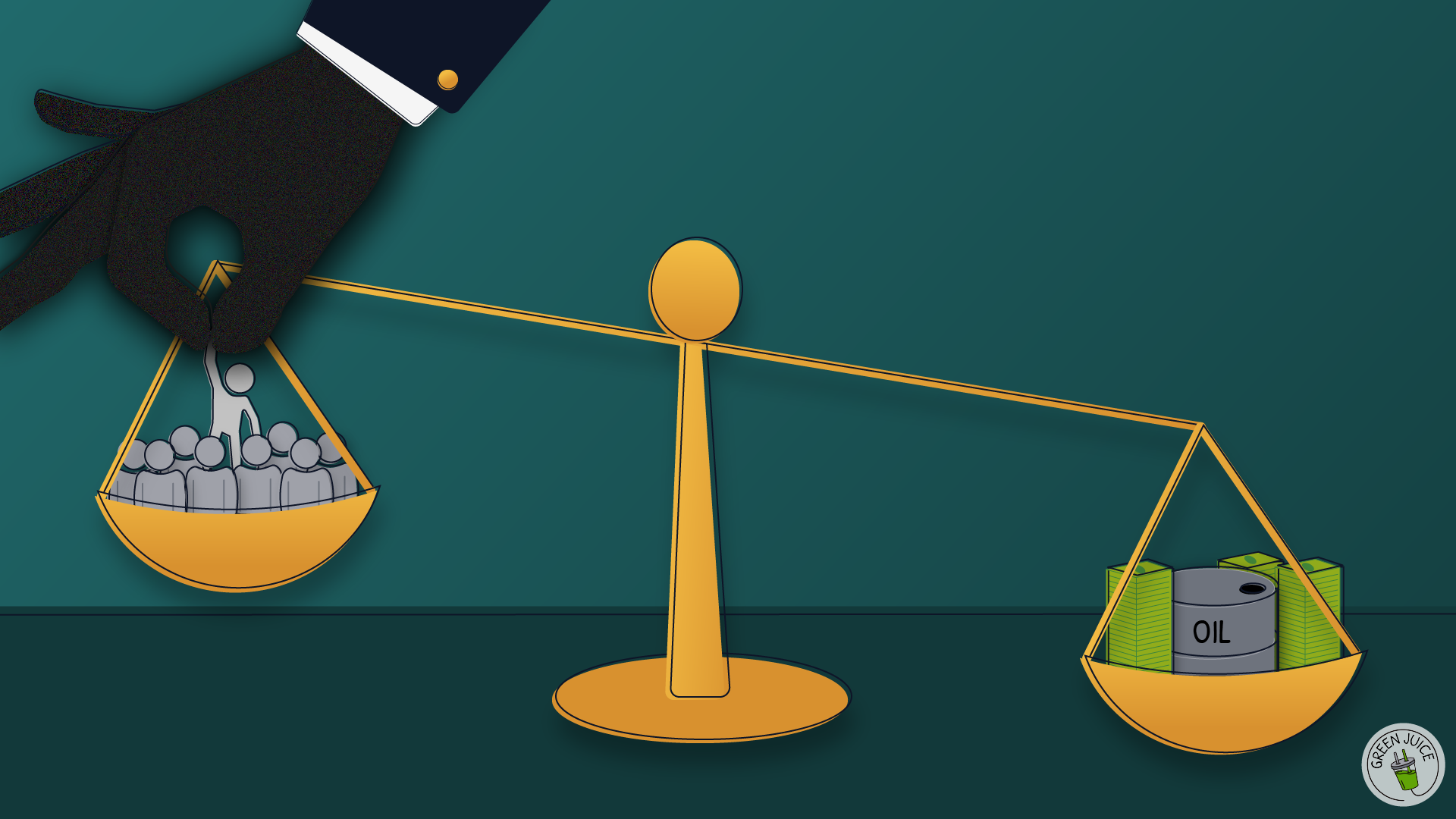
It will also require us to leave an absolute shit-ton of oil and gas in the ground. A mountain of gold, essentially, just sitting there, forever untouched.
The estimated value of our planet's untapped oil and gas? About $20 trillion.
Something tells me Donald Trump and his ilk won't be super chill with walking away from all that money. Yet the alternative is billions of people will die. Probably within the next 100 years, unless we can dramatically lower global emissions real soon.
The Nation argues that the best historical analogy, in terms of asking Capitalists to willingly forfeit such monumental wealth, is the abolition of American slavery. I quote:
In 1860, slaves represented about 16 percent of the total household assets—that is, all the wealth—in the entire country, which in today’s terms is a stunning $10 trillion.
"Slaves as property were worth more than all the banks, factories and railroads in the country put together,” civil war historian Eric Foner tells me. “Think what would happen if you liquidated the banks, factories and railroads with no compensation.”
Remember what happened when we politely insisted 400,000 Southern slaveholders set free their human property? I'm not a historian, but I believe they immediately started the American Civil War. Four bloody years during which more than 600,000 people died.
The goal of eco-socialism is not civil war. But we must be clear-eyed about the level of resistance the clean energy transition will encounter. We must likewise be honest with ourselves about how much power will be necessary to build to win that fight.
On that note... time for my first ask of the day: join the Democratic Socialists of America right now! Membership dues start at just $5 a month. If you're going out on the town tonight, that's like 1/50th of your Uber ride home.
DSA is the only organization in this country (to my knowledge) with a functional Ecosocialist wing committed to solving these problems. If you're in New York, sign up here and you might just get an onboarding phone call from yours truly.
The alternative is to pray these fossil fuel Capitalists come to their senses before it's too late.
They won't. No matter how many people die. For, according to the religion of Capitalism, $20 trillion is worth more than life itself.
Of course, things would be a whole lot easier if the Big Oil people could just pivot to becoming Big Solar people. But they're not gonna do that, either, because...
2. Clean energy technology has gotten too cheap to profit from
Within the past 20 years, the technology that turns sunshine and wind into electricity has gotten so ludicrously cheap to produce that there is effectively no good way to profit from it.
This is true at the industrial scale, where 90% of renewable energy projects are now cheaper than fossil fuels.
It's increasingly true at the residential level, too. In Australia today, you can get rooftop solar panels installed for less than 50 cents a watt. Back in 2000, the going rate was closer to 5 dollars a watt. (It's still around $3.50/watt here in the U.S., lol)
If you want to read more about this idea, check out Brett Christopher's book The Price is Wrong: Why Capitalism Won't Save the Planet.
Cheap, renewable energy is one of humanity's crowning achievements. We should be ecstatic that it exists! After hundreds of thousands of years of cutting down forests for wood to burn, whaling for blubber, drilling for oil... we finally invented (nearly) free, (basically) unlimited energy. Imagine the possibilities! No more resource wars. No more scarcity. No more pollution. No more poverty. Renewables can usher in a true Age of Abundance. We could cure disease, advance science, unlock the mysteries of the universe!!
......or we can pretend wind and solar are evil and ban them from getting built at all, which is exactly what the fossil fuel Capitalists are trying to do right now.
The climate tech misinformation machine is wild. It gets disseminated at every level of our billionaire-owned media and government.
And yet the truth is out there, to quote The X Files, if you know where to look.
3. Soon, much of the planet will be uninsurable
One place they don't want you to look? Insurance companies.
Private insurance companies are the one corner of Capitalism that will never lie to you about climate change.
That's because insurers can only make money if their assessment of risk is accurate. So they consult tons of data—including scientific climate assessments—to forecast the chances your house will burn down during a wildfire or suffer damage from a flood or get wiped out by a hurricane. Insurance companies have to consider the realities of climate change. Otherwise, they'd get hosed by their customers.
As a result, it's become almost impossible to get homeowner's insurance in Florida and California. Insurance companies simply will not insure homes in climate-vulnerable areas, which will soon include *checks notes* the whole world.
So what happens when the planet is no longer insurable?
Well, without homeowner's insurance, you can't get a mortgage, which means you can't buy a house. If you've already got a mortgage, your insurance payments may increase to the point where you can no longer afford to pay them. Unless the government steps in to help, the housing crisis we're suffering through today will look like a round of Monopoly Junior by comparison.
In the end, there are only two outcomes: eco-socialism, or eco-fascism.
Right now, America's heading in the wrong direction.
But guess what? We're not alone in this world. Good things are happening elsewhere on planet Earth. One country, in particular, is showing us all a better way.
4. China is showing the world what an eco-socialist government looks like
If your impression of China is still "poor Communist peasants who manufacturer our cheap crap", you need to update your priors, as the kids say.
In 1978, China began implementing a series of economic reforms that have changed their model of government from Full-On Communism—a system in which everything was planned and operated by the State—to a never-before-tried hybrid model of State Socialism + Heavily Regulated Capitalism, in which private companies are allowed to compete and even make a profit—so long as what they produce aligns with the long-term goals of the country's government.
The Western media really doesn't like to talk about it, but what China's accomplished in the last 40 years is nothing short of astonishing:
- 800 million people have been lifted out of poverty
- Today, more than 90% of Chinese families own their own homes
- China is the first country to have reached peak greenhouse gas emissions—meaning from now on, they'll reduce their overall emissions every year
The Chinese government, heavily influenced by Pan Yue's eco-socialist idea for a Green GDP, has been pouring money into climate technology companies. It's working. Today, China manufactures over 80% of the world's solar panels. They're building high-voltage power lines to send energy from vast swaths of renewables in sunny and windy rural regions to power their cities. They debut new high-speed train lines like every other week. They control 76% of the world's electric vehicle market and produce some of the coolest e-cars I've ever seen.
I could go on. And I will, in an upcoming series of posts!
Of course, China's got their own problems. They could probably tone down the surveillance state stuff. They should leave Hong Kong alone. They are not perfect. But, hey, neither are we. And if a livable planet means choosing between this new Chinese-style of government—mixing a strong state with highly regulated private sector—or Donald Trump Jr. as our next President, well, I know what side I'm on.
The only way to fix our problems is by making radical changes to how our country is run and how our industries are regulated. And time is of the essence.
5. Everything in the U.S. is about to fall apart
Fun facts:
- The average age of America's energy grid infrastructure—our power lines, transformers, substations, etc.—is about 40-years-old.
- The average lifespan of most of that grid infrastructure... is about 40–50 years old.
Shit is about to start breaking every which way.
The smartest thing we can do to prevent major blackouts from becoming commonplace in this country is to repair and update our aging energy grid. This is called grid hardening, and a big investment in it could improve our grid's capacity by as much as 50%.
Except we're not going to do that. That's because the private, for-profit utility companies have no incentive to repair the grid. Why? Because they literally only make a profit by building new stuff. They do not make a profit by repairing existing infrastructure. So they don't.
Any real investment in our grid will come from building more of it. Expensive projects that will get passed directly onto ratepayers in the form of rate hikes.
Once again, there are only two options. It's barbarism or socialism all the way down.
But take hope, gentle reader, for the the winds of change are blowin'.
6. Tomorrow morning, a proud eco-socialist will be sworn in as Mayor of New York City
On New Years' Day, 2026, a 34-year-old proud eco-socialist named Zohran Mamdani will be sworn in as the next Mayor of New York City.
An estimated 40,000 cold but happy spectators will be on hand to cheer him on. I'll be among them, hooting and hollering, smiling and crying in equal measure. Thousands of neighbors gathering under the banner of our shared belief in fairness, justice, and mutual prosperity. All of us still marveling at how what they said could never happen is really happening, has really happened.
Many of us in attendance will have volunteered for Zohran's campaign, and many of us will continue to fight every day until his ambitious affordability agenda is realized. That agenda includes a climate plan to renovate 500 public schools as clean energy hubs and turn 500 asphalt schoolyards into greenspaces, which will improve air quality, lower utility bills, reduce flooding, cut into our greenhouse gas emissions, and show this city what real environmental justice looks like.
It's going to be a beautiful day.
If you made it all the way to the end of this one, congratulations! You're an eco-socialist now.
To make it official, all you gotta do is join the Democratic Socialists of America.
If you're in New York, sign up to get involved with the NYC-DSA Ecosocialist Working Group here.
Or, if you're not in New York, you can still get involved with Ecosoc work by signing up for the national Ecosoc email list here.
Thanks for reading, please subscribe to my little newsletter, and happy New Year.
Solidarity forever,
Jon
Member discussion