
⚡🦉Mythology Month🦌🧜
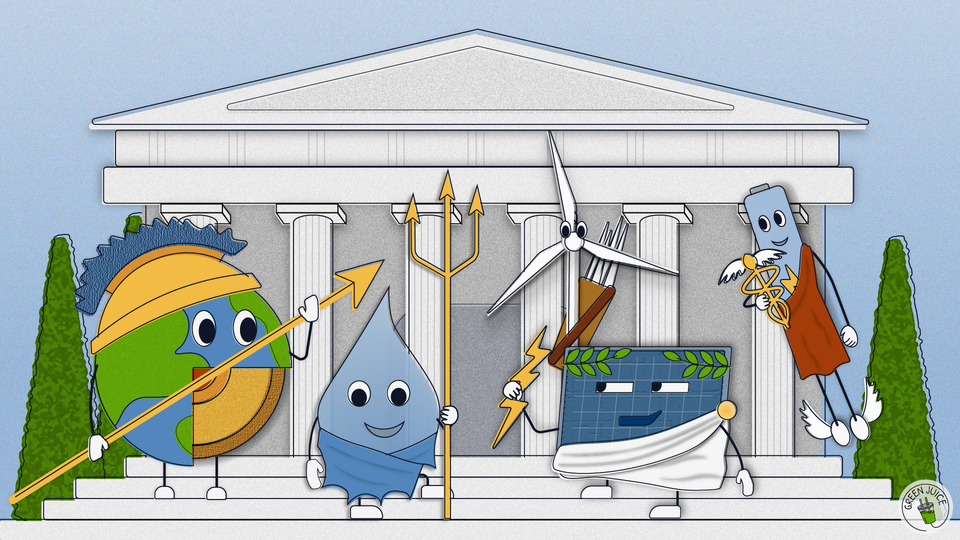
Welcome to ⚡🦉 🔱 MYTHOLOGY MONTH 🦌🧜🦢
When I was in sixth grade, my ~ advanced ~ English class was forced to perform a parody song about Greek mythology, set to the tune of Billy Joel's "We didn't start the fire", in front of the whole school.
A sample verse, plucked from shame-seared memory:
"Gaia, Earth, married Sky, cyclops with one eye, Helios ran the sun, Hermes ran past everyone, Ares, God of War, we can't take it anymore! We didn't start mythology..."
Imagine the blank stares from my classmates. Like the unblinking 100-eyed Argos!!
Despite Mrs. Greenwald's best efforts, I've remained a lifelong fan of mythology. Not just Greek myths, but all flavors. I love learning about the creative stories we humans tell each other to explain the world and everything in it. Myths are magical and they're powerful. They endure.
What I don't love are the modern myths dreamed up by marketing departments to poison minds against climate action.
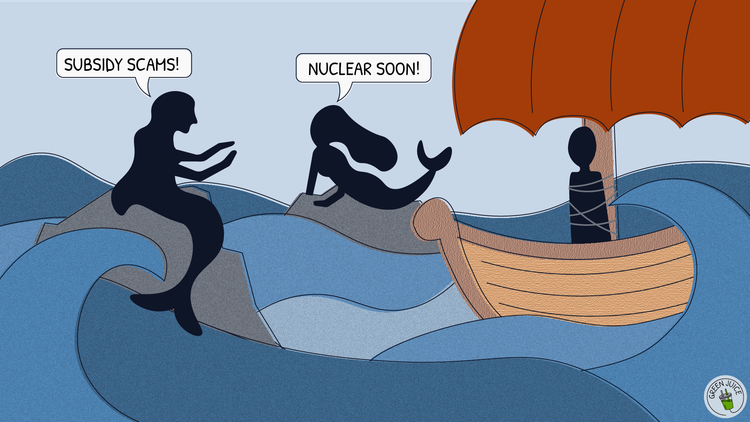
Oil majors, gas frackers, and for-profit utilities have been doing this for decades. Not just with national ad campaigns, but "by spending millions funding think tanks, front groups, and civic foundations to spread misinformation and narratives of climate change skepticism while maintaining an appearance of independence."
These multinationals literally send employees to infiltrate rural communities around the country to convince folks that solar farms leak toxic chemicals into farmland (nope) and windmills give them cancer (insane!).
A functional government would put a stop to the virulent spread of misinformation. But we're all out of those! So it's up to us—you, me, and everyone we know—to drown out the bullshit. The first step is making sure we're all on the same page.
So all February long, Green Juice's intrepid team of researchers—Dr. Aarati, Abby the Intern, and yours truly—will debunk and demystify the biggest myths persisting around climate change and clean energy.
Starting with a doozy: 5 myths about climate change.
Buckle up, myth buster.
Myth 1: It's really cold out, so global warming must be fake
It's been a frigid winter in NYC and around the country. Maybe around the world, too, I don't know. I'm a self-obsessed American!
But do frosty temps mean climate change has been overstated? Are we swinging back in the opposite direction, heading for a new Ice Age??
Nope.
The World Meteorological Organization (WMO) has confirmed 2025 was one of the three warmest years in recorded history. This continues our ongoing hot streak: the past 11 years have been the 11 warmest ever recorded. We're 11 for 11, baby!
Globally, temperatures over land are already 2°C (3.6°F) higher than they were in 1970.
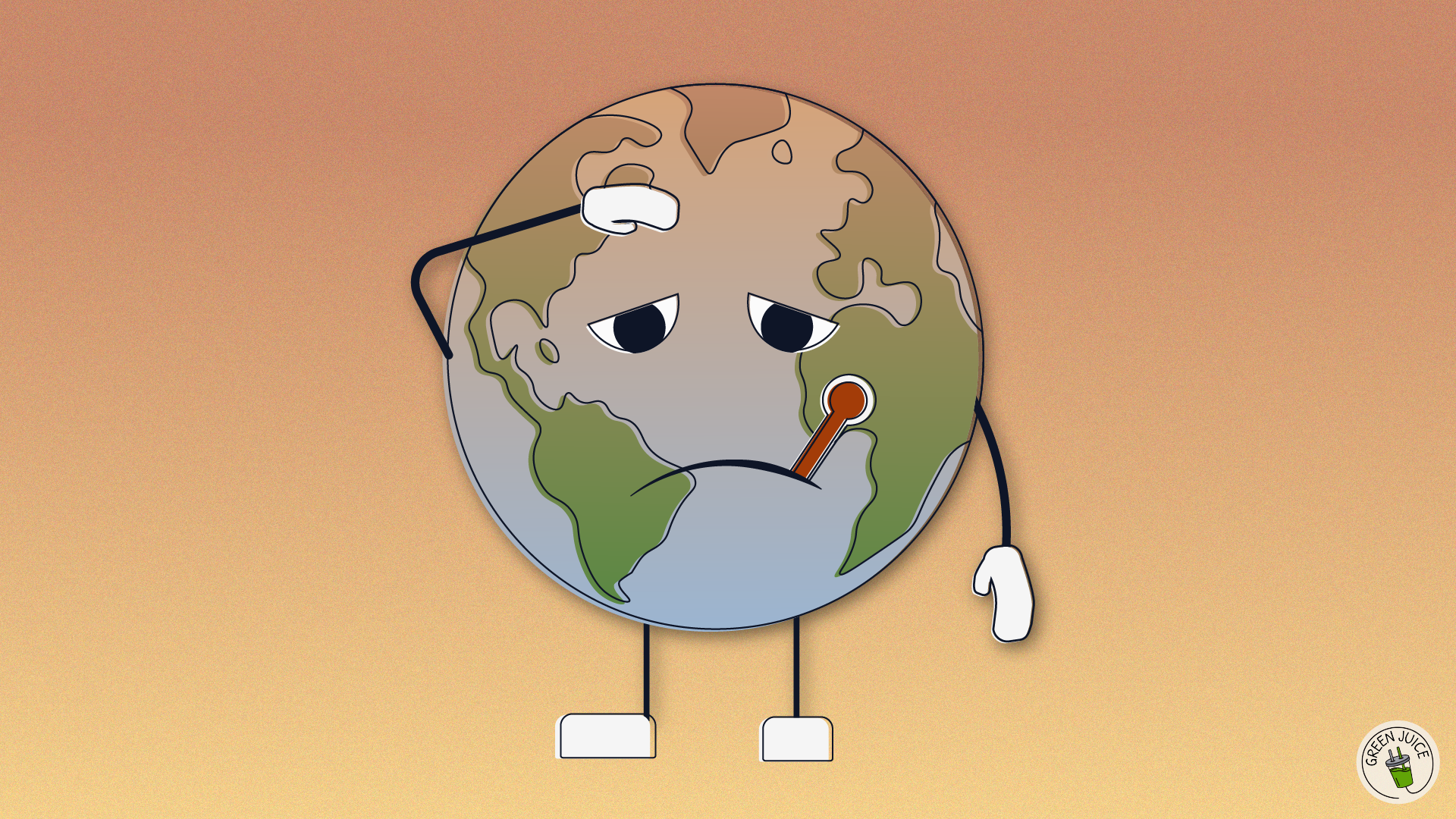
So what's up with the frosty weather?
A few ways to make it make sense:
1. Ocean temperatures are a more reliable indicator of global temperature changes
The weather on the surface of the planet is a lot less stable than the "weather" in our oceans. Makes sense, right? So let's go ahead and pull up a chart tracking ocean temperatures over the years and see if we can spot any trends.
Let's see... just loading the chart... annnd oh. Oh no.
Reminder: ocean heat content is a BETTER metric of global heating than surface temperatures (which are far more prone to fluctuations due to El Nino/La Nina), and unlike surface temperatures, it set a NEW RECORD THIS PAST YEAR: https://t.co/Gd88TeF3jX pic.twitter.com/SgHv1GnccR
— Prof Michael E. Mann (@MichaelEMann) January 15, 2026
According to the peer-reviewed journal Advances in Atmospheric Sciences, in 2025 Earth's oceans' heat content rose by a staggering 23 zettajoules. That's 23,000,000,000,000,000,000,000 joules, by my count—the energy equivalent of several hundred million Hiroshima-sized atomic bombs stored as thermal energy in the water.
2. The reason it's so cold is because all the ice in the arctic is melting
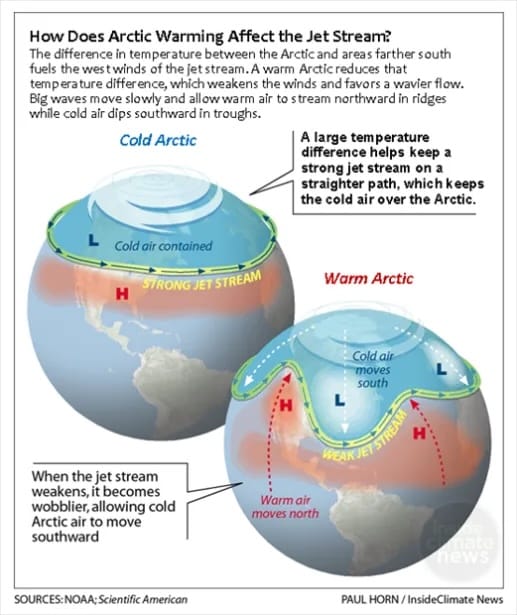
Check out the graphic below. We know the ice at the top of the Earth is melting rapidly. How? Because NASA takes pictures of it. As the ice melts, air temperatures in the Arctic rise. And when you create weird temperature differences between the northern and middle parts of the planet, it affects the jet stream—the "river" of air that circles the top of the globe. An infusion of warm air makes the jet stream wobble and dip. It loses containment, bringing the still-pretty frigid Arctic air to normally temperate zones.
And that's just part of what's happening up there.
3. Don't forget Arctic Amplification, the Albedo Effect, Melting Permafrost, and the Beaufort Gyre...
I'm not gonna get into all that, but Dr. Aarati made an excellent video (just 5 mins long!) that beautifully illustrates what's happening over in Santa's neck of the woods:
This video, I should mention, is five years old. We've known about these problems for a long time. And yet America today is moving backwards on fixing the climate.
...damn, myth #1 was a doozy. Are they all gonna be that brutal? Let's find out!
Myth 2: Actually, the Earth is getting hotter... but that's just a thing that happens sometimes!
As global warming gets harder and harder to deny, a new myth has emerged: yes, it's getting hotter out... but that's just the Earth doing it's thang. Sometimes the planet gets hot for no good reason. It's always done that. Look at the records!!
Great, sure, let's take a look at the records.
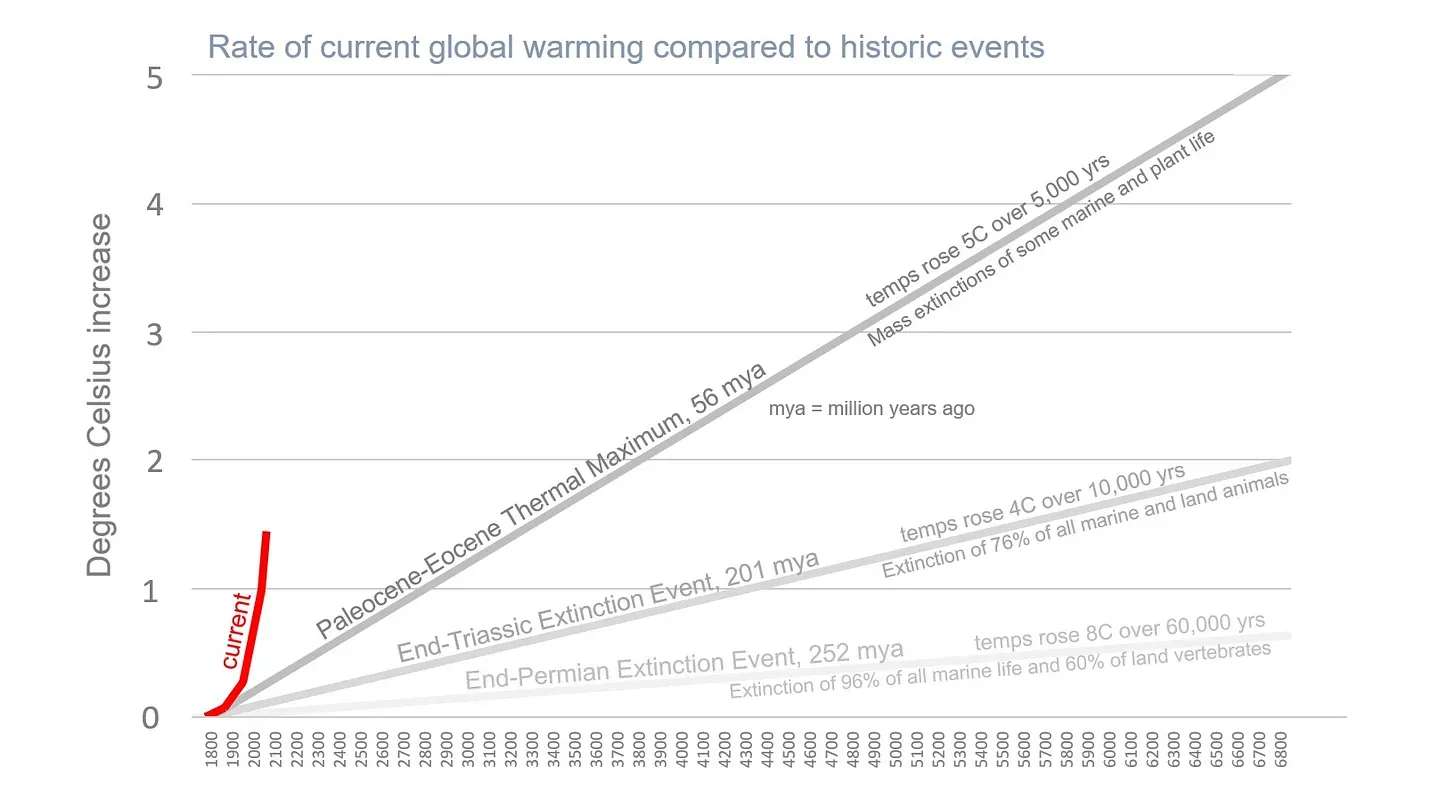
Here's a chart made by climate writer Stephen Carr Hampton in his newsletter comparing the current rate of warming to three of the biggest mass extinction events in history.
Verdict? Modern climate change is happening 27x faster than those previous times when the planet got hotter.
So, yes, the planet has sometimes gotten warmer on its own accord. But not like this.

Read Stephen's post on the subject if you're hankering for more depressing charts!
Myth 3: The only way to stop climate change is by geoengineering
Speaking of The Matrix... remember what happened in The Matrix when the humans decided the only way to stop the rise of the solar panel-powered robots was to blot out the sun forever?
Let's just say it didn't turn out the way they'd hoped.
There's a similar line of thinking coming out of certain Silicon Valley libertarian vipers' nests. It's called geoengineering, which we can define as "the deliberate, large-scale intervention in the Earth's natural systems to counteract human-caused climate change."
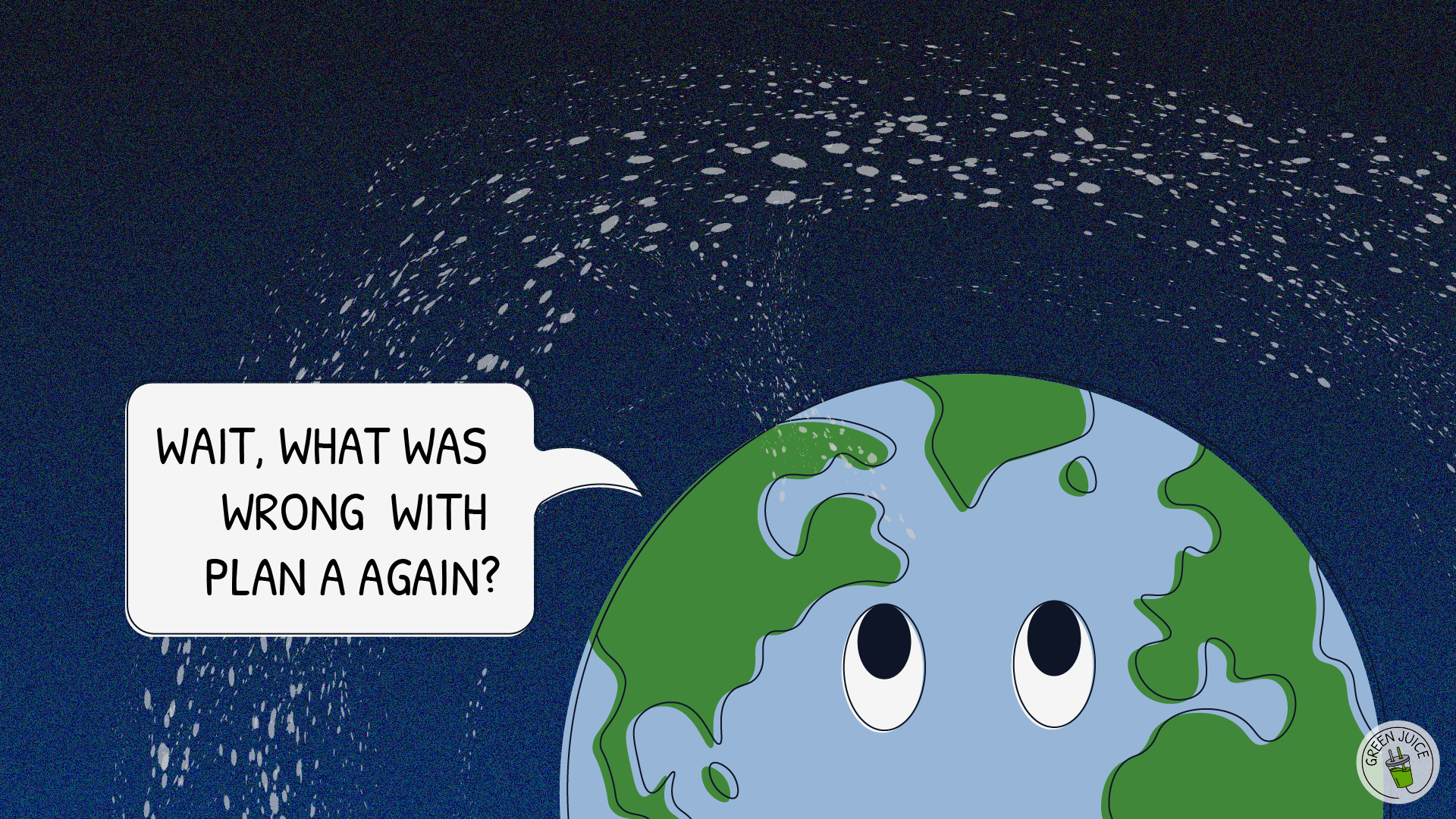
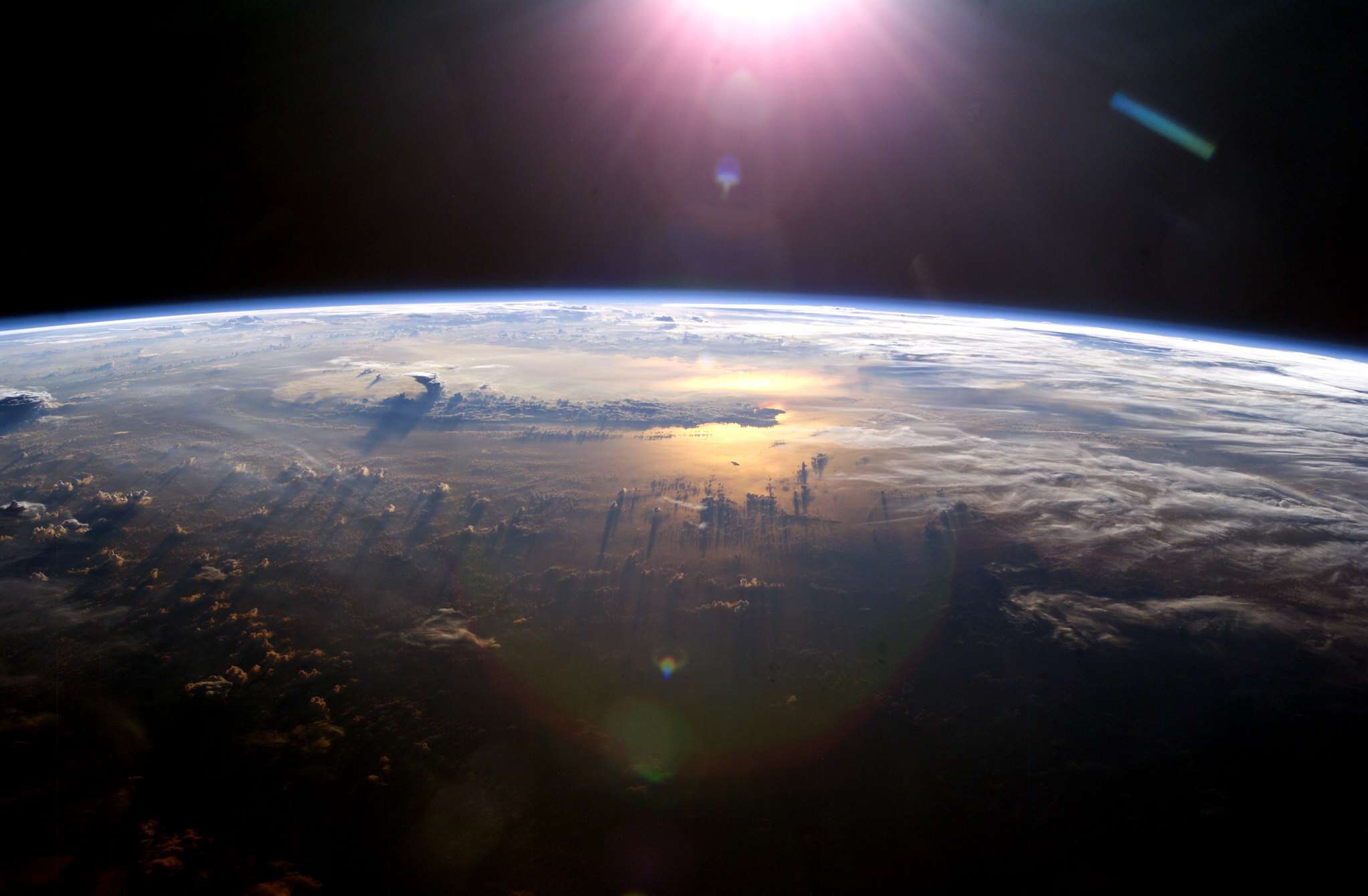
Basically, the rich and powerful have convinced themselves that the only way to stop climate change is to inject massive amounts of shiny, aerosolized sulphur particles into the atmosphere in order to reflect more sunlight back into space.
What could possibly go wrong?
Lots of stuff. Obviously!! Stratospheric Aerosol Injection (SAI) is meant to mirror the cooling effects of massive volcanic eruptions by force-feeding millions of tons of sulphur into the atmosphere. Scientists suspect doing so might have some adverse side-effects, like acid rain, ozone depletion, and a host of other unknowns.
Still, SAI has potential. Humans just aren't moving fast enough on implementing climate change solutions. There may indeed come a point when we need to take drastic action to prevent the worst possible outcomes.
The way to go about it, in my opinion, would be to make sure SAI technologies are tested very, very carefully in tightly controlled lab conditions by neutral scientists who have zero financial stake in its success. Right??
Or, alternatively, we could let a U.S.-Israeli startup called Stardust Solutions go apeshit injecting random chemicals into our collective atmosphere starting this April.

Truly wild, the stuff we allow to happen in this country on the off chance it'll make some rich assholes even richer.
Myth 4: Methane is cleaner than coal
When fracking took off in the early 2000s, Big Oil and Big Gas came up with a great PR campaign: so-called "natural" gas would serve as a bridge fuel from coal to our renewable energy future. It was an easy sell: "natural" gas, which is 98% methane, sure seems cleaner than smoky old coal.
And it is, kind of. Burning methane emits fewer planet warming chemicals than coal.
But only if you burn it.
The problem is that methane—invisible, naturally scentless—loves to pull a Houdini and escape into the atmosphere. Methane escapes from leaks in gas pipelines, from our gas ovens, and from the sedimentary basins where we continue to extract it—more and more, every year.
When methane gas escapes unburnt into the atmosphere it becomes 80 times worse for climate change than carbon dioxide.
There's one caveat: after 20 years, methane starts to break down a little bit. After chilling in the sky for 100 years, methane will only be 30 times worse than CO2.
That's why New York Governor Kathy Hochul is currently trying to change the laws about how our state measures methane emissions. She wants to move away from the 20-year measurement to a 100-year measurement. Why? Because our emissions look a whole lot better that way.
But c'mon, Kathy. Remember those graphs from earlier? We aren't gonna be around in 100 years if we keep this up.
In the past few years, we've started to measure methane with satellites equipped with special spectrometers. What they're finding is that we're leaking methane fuuuucking everywhere.
The International Energy Agency (IEA), arguably the most respected climate organization in the world, estimates methane emissions globally are about 80% higher than what countries reported to the UN.
Here's a new paper that found methane pollution from U.S. oil and gas infrastructure causes more climate change than the entire economies of all but seven nations on earth.
The paper is using the 100-year time frame, by the way.
Okay, I'm getting upset. Let's move on.
Myth 5: Individual choices don't matter
This one is a bit tricky, because I actually agree... if you add one condition:
Individual choices don't matter in a vacuum.
Recycling, for example, is a noble practice. But it's not going to make a dent when we know that just 57 companies are responsible for 80% of greenhouse gas emissions since 2016.
So, how can individuals make an impact?
By harnessing the power of myth for good.
Humans are storytellers. Always have been. If you learned something from this post, I challenge you to share your newfound knowledge with a friend. Frame it as a story of good vs. evil. Those are the best kind. It shouldn't be too hard.
Read part 2 in this series!
 Jon
Jon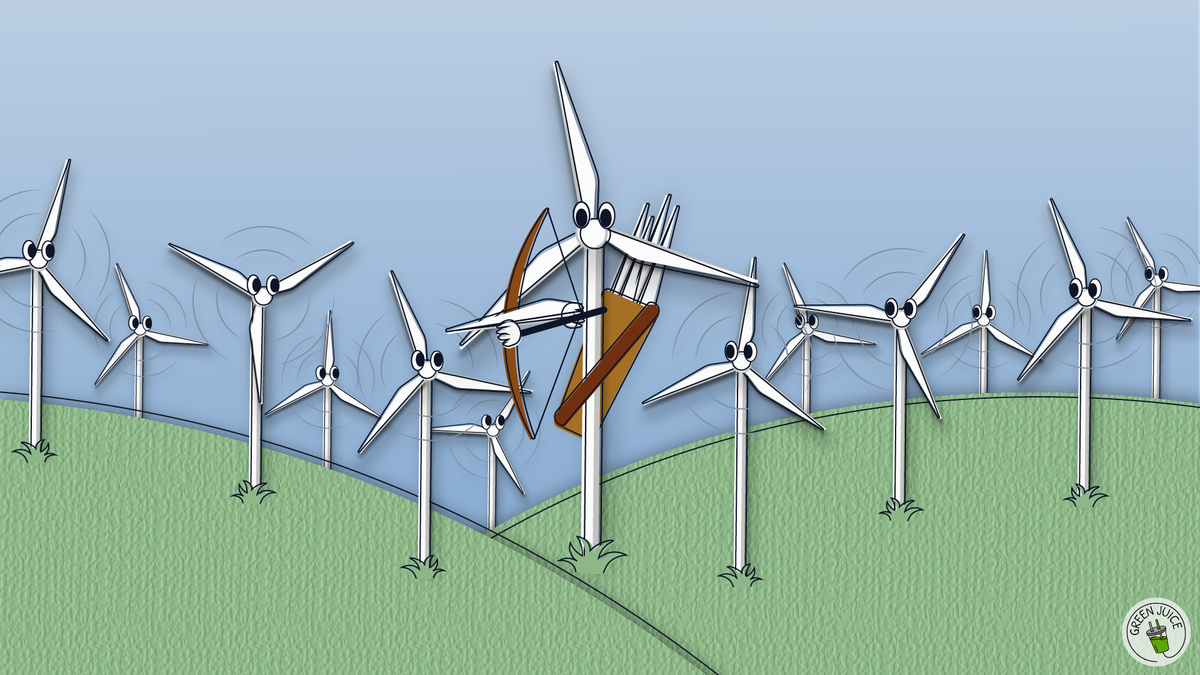

Member discussion