
Power to the people, for the people, by the people
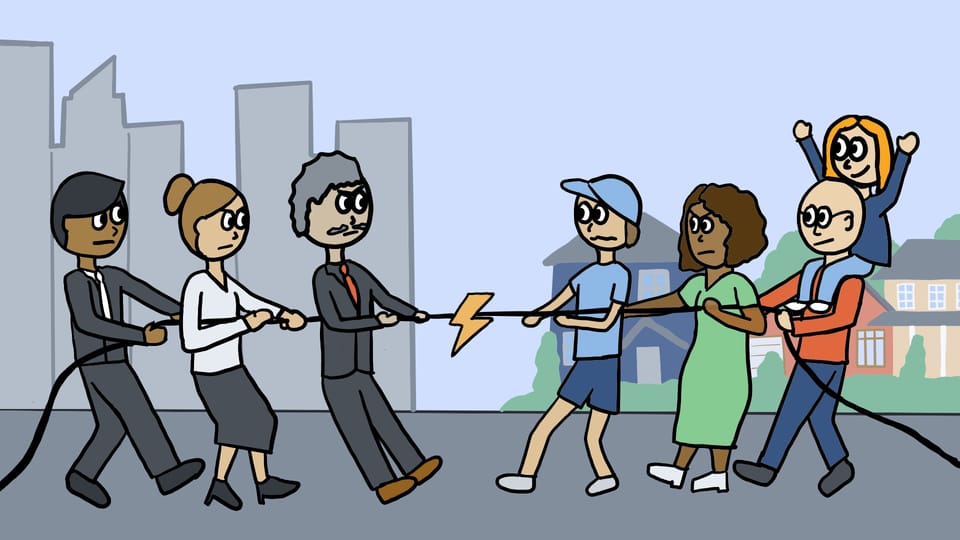
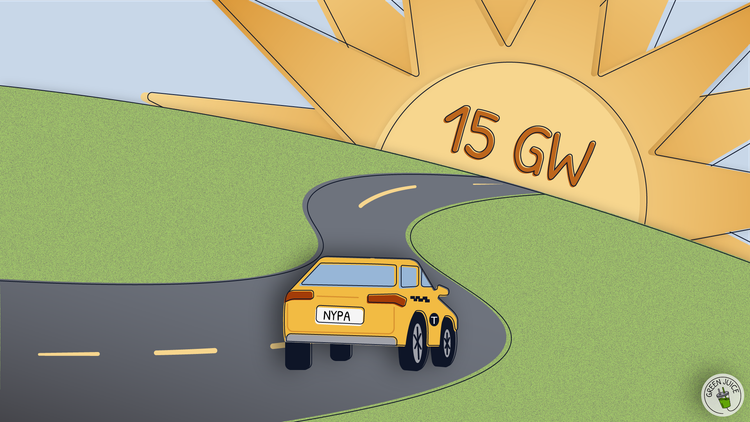
Back in August, I wrote about the history of the New York Power Authority (NYPA)—the largest state-owned electric utility in the country—and the ongoing campaign led by groups like NYC-DSA Ecosocialists and Public Power NY demanding they build 15 gigawatts of publicly owned renewable energy projects as soon as humanly possible.
(FYI, NYPA votes on an updated buildout plan on Tuesday. Fingers crossed for 15 GW!)
Missing from that August article, however, was a proper primer on public power.
What does that term mean, really? Why's it superior to private power? Is public power always renewable? Where does it exist today? And how do we get more of it?
Let's find out.
1. What is public power?
Public power refers to when electric utilities are owned by a state, city, municipality, community, or (often rural) cooperative and run as not-for-profit enterprises.
Now, that doesn't mean publicly owned utilities don't make money—they do!—but instead of turning that money into alimony payments for Wall Street shareholders, the revenue circulates in the local economy. It can be used in many fruitful ways: funding public services, getting reinvested into the utility, or directly lowering people's energy bills.
A second benefit of cutting out the profit motive is that public power utilities only raise their rates when they actually need to fund something important, like upgrading our aging grid infrastructure. Crazy concept, I know!
The result is that public power customers save nearly $200 a year on their bills compared to private power customers.
"Wait, wait!!" gasps the cadaverous capitalist in his little quarter-zip vest. "Surely publicly owned utilities provide shittier service than the private professionals! You get what you pay for in this wretched world!!"
Nope. Prudent spending leads to more reliable service. Public power customers experience blackouts 72 minutes less often every year than their private power counterparts.
There are some 2,000 publicly owned utilities in the U.S. today serving ~55 million people—one in seven Americans. Those lucky folks are collectively saving $4.2 billion a year on their bills.
2. Is public power always renewable?
No, public power can and often does include fossil fuel power plants.
If you're confused, it's probably because you've heard me use the terms public power, public renewables, publicly owned renewables, etc. interchangeably.
That's my bad. But sometimes one doesn't have room on one's sign to write out "Hey Governor Hochul, direct NYPA to build more publicly owned renewable energy projects, please and thank you."
"Build public power" just has a nice ring to it.
3. What isn't public power?
Looming in contrast to publicly owned utilities are the Investor-Owned Utilities (IOU). These are for-profit companies funded by Wall Street fat cats whose entire sense of self-worth is predicated on making a sizable return on their investment.
In the U.S., IOUs are the norm. Think Con Ed, Com Ed, Southern California Edison, PG&E, Duke Energy, Florida Power & Light... etc. IOUs deliver electricity to around 70% of Americans.
(I specify IOUs deliver electricity as opposed to generating it, because, well, that's mostly how it works! Check out the Green Juice primer on utilities for context on what utilities actually do.)
 Jon
Jon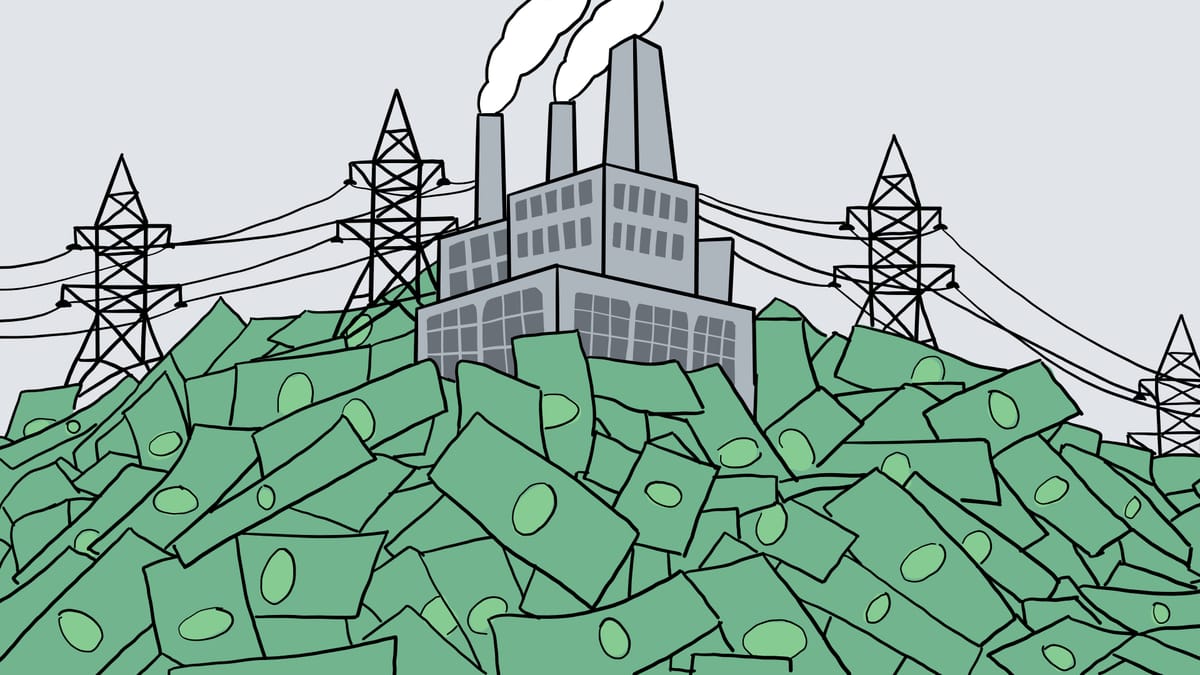
Confusingly, Investor-Owned Utilities are also state-granted monopolies. The idea here is that it'd be impractical to have multiple companies operating their own energy grids in the same area—you don't want five sets of power lines running through your backyard, for instance. But the monopoly means that you and I don't get a choice about who provides our power. We're served by whichever utility was granted control over the area we live in.
Unless, that is, we municipalize.
4. How to build public power
Here in New York, we're lucky to have a state-owned utility we can bully pressure to build more renewable energy. Everything NYPA builds qualifies as public power.
Most states don't have a NYPA, though. In fact, very few do.
For many folks, the best bet to build public power is through a process called municipalization. Basically, taking over your local Investor-Owned Utility.

There are about 450 municipally owned utilities in the U.S.—munies, as they're cutely nicknamed. Munies are owned by the communities they serve and run by the local government.
Munies are not necessarily puny:
- The Los Angeles Department of Water and Power (LADWP) serves more than four million residents and businesses
- The Long Island Power Authority serves more than a million customers
- Seattle City Light serves half a million people
Just to name a few.
Municipalization can be amicably achieved. An IOU might prefer to sell rather than duke it out in a prolonged court case—especially if the town included a buyout clause in its franchise contract.
But more often than not, IOUs are extremely resistant to relinquishing their state-granted monopolies. Of course they are! IOUs are money printing machines; Con Ed made over $15 billion in revenue last year alone.
If you're reading this and considering forming a munie of your own, you absolutely should, and there are lots of resources on how to do it. But know that it's probably gonna get ugly. Just ask the good people of Boulder, Colorado.
5. What happened in Boulder?
Back in 2003, the granola-crunching citizens of Boulder attempted to take over their local monopolistic IOU, Xcel Energy. Their motives were righteous: they wanted a faster transition to renewable energy and control over their electric future.
Naturally, Xcel Energy proceeded to flip the fuck out and took the city to court for the next ten years. They employed a barrage of delay tactics: objections, lawsuits, and regulatory leverage.
Meanwhile, Boulder discovered their initial feasibility study was way off base. Full municipalization would likely cost two or three times more than they'd anticipated. As the years trickled by, public support for the project waned, costs mounted, and the calculus shifted.
In November 2020, Boulder voters approved a new 20-year franchise agreement with Xcel Energy. The city won some stronger commitments to emissions reductions and clean energy targets, but the story remains a cautionary tale, with plenty of lessons to be learned.
 John Farrell
Learn more about Boulder's municipalization efforts
Lessons, for example, such as: maybe a full-on takeover of the utility isn't always necessary to get what you want. Maybe you can just start your own utility, instead.
That's exactly what's happening in Ann Arbor, Michigan.
6. A novel approach in Ann Arbor
In November 2024, Ann Arbor voters overwhelmingly approved a proposition to establish a community-owned Sustainable Energy Utility (SEU), an opt-in service that would provide customers with "100% renewable energy from local solar and battery storage systems installed at participating homes and businesses."
 David Roberts
In-depth interview with Missy Stults, Ann Arbor’s director of sustainability and innovations
The SEU would exist in parallel with their existing Investor Owned Utility, DTE Energy.
But why doesn't this approach violate the IOU's state-granted monopoly?
Two reasons:
- They're not building out any new distribution infrastructure. Instead, they're seeding the city with Distributed Energy Resources (DERs) like solar panels and batteries. DERs don't need poles and wires. They plug right into a building's electrical panel.
- They smartly made their service opt-in and therefore supplemental. If you don't join the SEU, you'll remain a DTE customer—and even if you do opt in, you'll still get backup power from DTE if the SEU can't meet your needs.
I think this hybrid option is really smart. They can (hopefully) avoid going to court while creating the momentum and legitimacy necessary for a full-on takeover—all while pumping renewable public power into their quaint Michigander community. Go on, Big Blue!

Member discussion