
Big questions for balcony solar in the Big Apple
A balcony solar bill was recently introduced to the New York state legislature! We covered the basics last week. Read that post here.
Green Juice has been inundated with questions all week long from readers real and imagined about how balcony solar would work in New York.
Questions, such as...
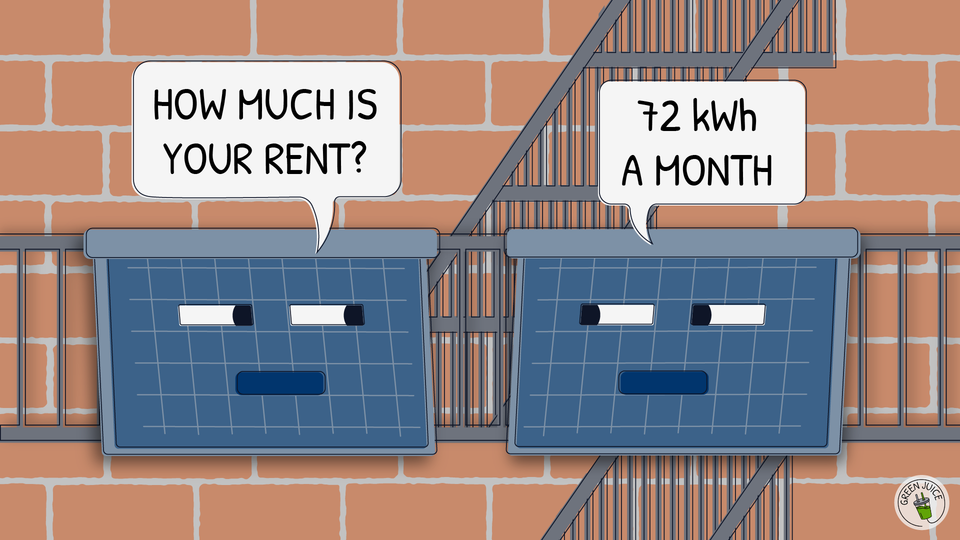
Will my fire escape be eligible for balcony solar panels?
If not... can I just install them anyway?
How much total power could balcony solar generate?
How much money would I save on my utility bill?
What impact can home batteries have on savings?
What about balcony solar for the rest of New York state, you biased Brooklynite?
What's the status of balcony solar around the world?
This week, we attempt to address all of the above... and get through about half of them. There's a lot to say, and I don't have an editor.
Let's take it from the top.
Are fire escapes balconies?
The SUNNY bill, as currently written, doesn't specify whether fire escapes will be eligible for balcony solar panels.
Fire escapes are as close to balconies as many New Yorkers, myself included, are likely to come by. We simply love to awkwardly clamber through our kitchen windows to drink a cup of coffee in the cool morning air, smoke the occasional herbal cigarette, catch an obstructed view of the sunset, and surveil our neighbors.
There are fire escapes everywhere you look in NYC. Balconies, on the other hand, are largely confined to luxury high-rises, whose rich tenants are less inclined to care about saving on their utility bills. So the question of whether fire escapes would be eligible for balcony solar, should this bill pass, is a meaningful one. We need all the distributed power generation we can get.
Technically, however, the primary function of a fire escape is to be an "emergency exit", and there are laws on the books restricting their use. You cannot, for instance, "impede their immediate use in the event of fire or other emergency". Furthermore, "no person shall place any encumbrance of any kind before or upon any fire-escape.”
Would either of those laws disqualify mounting balcony solar panels on fire escapes? I'm not sure. The panels have power cords that would likely need to be fed through the window in order to plug into an interior outlet. Does that count as impeding use? Balcony panels will need to be mounted to the railing of the fire escape. Is that an encumbrance?
And then there's this: New York fire escapes are often old and rusty. Standard balcony solar panels can weigh up to 40 lbs. So will the FDNY blast this whole idea with cold water?
Solution: a safe, fair compromise for fire escape solar
To make fire escape solar viable, in my amateur opinion, we need to address these concerns:
- Power cords from the panels can't create tripping hazards
- The mounting gear needs to be simplified
- The panels need to weigh less
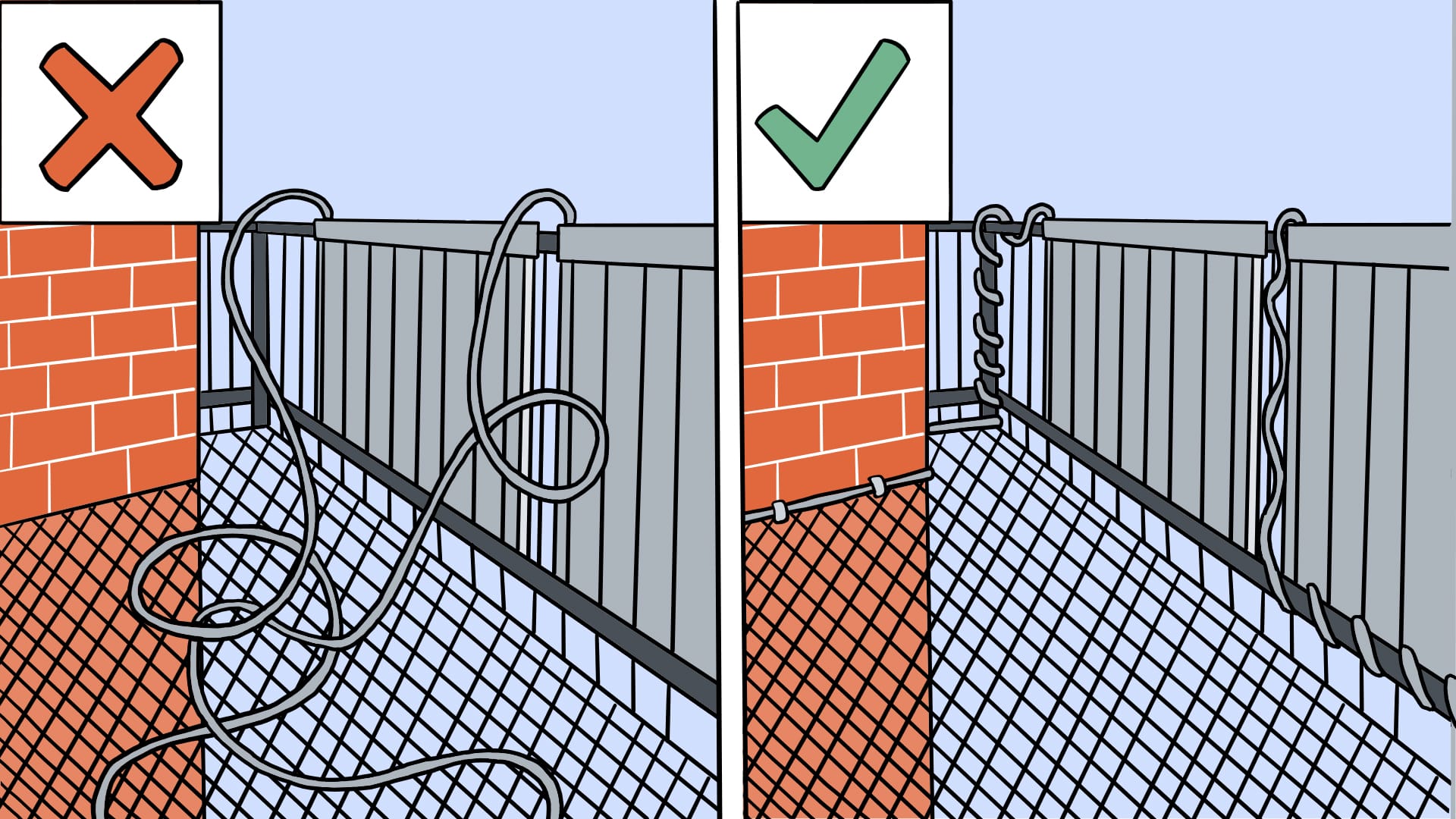
The power cord concern is addressed easily enough: the law can mandate cords must be secured along the railing so they don't present a tripping hazard. Because solar panels shouldn't be plugged into extension cords, manufacturers may need to offer longer cord lengths. Doesn't seem too hard.
To address the other concerns, we must once again look to Germany for guidance.
A Munich-based balcony solar startup called Climatos has figured out how to produce ultra-lightweight, flexible plastic balcony solar panels that can be secured to a railing via stainless steel straps that function as cable ties.
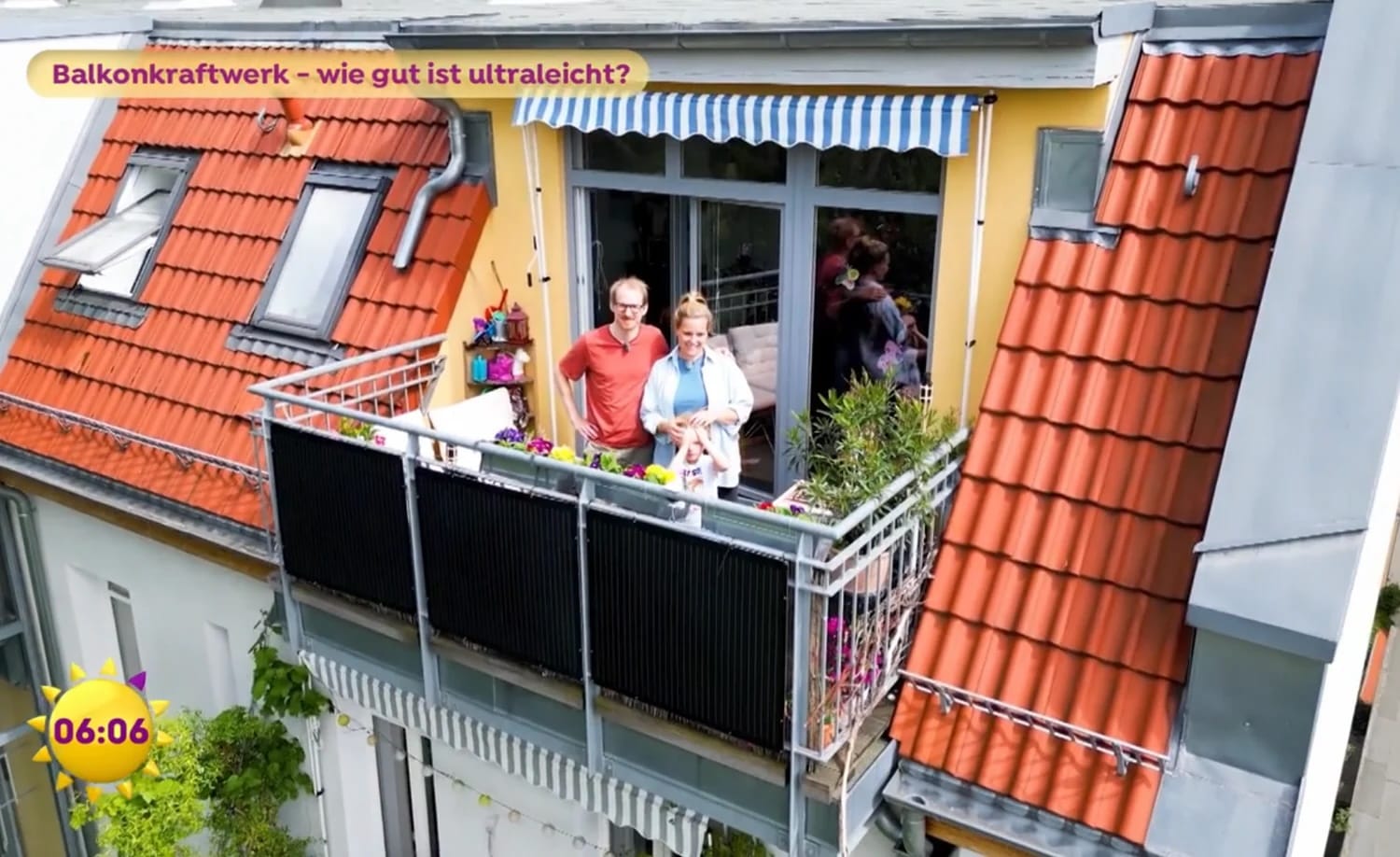
Climatos' panels weigh just 5.7 lbs (per manufacturer specs). That's a huge improvement over the average panel.
The downside is that they can only produce up to 150 watts per panel. But because they weigh so little, you might be able to install two or three or four of them. And given the rapid rate at which solar panel technology is improving, maybe in a couple years Climatos (or a competitor) will find a way to drive up the wattage.
Hell yeah, problem solved! High fives all around!
What if the FDNY bans fire escape solar anyway?
The FDNY takes fire precaution seriously. That's kinda their whole deal. So there's a decent chance fire escape solar may be fully prohibited, even if balcony solar is legalized, and even after I came up with that great compromise idea of everybody importing panels from a German-language website.
Can we just install fire escape solar without alerting the authorities?
An anonymous Green Juice reader asks:
What if we just do it anyway? I've got an herb garden on my fire escape and nobody ever gives me shit about it!
Reader, Green Juice is not Matthew McConaughey. We do not endorse lawbreaking. But we can tell you about a nascent movement in the Distributed Energy Resources universe known as Permissionless DERs, which advocates for (safely) installing your own balcony solar and home batteries without tipping off the federales.
Proponents of Permissionless DERs, such as the DER Task Force, cite the original Energy Task Force in NYC as a permissionless success story. In 1976, the Energy Task Force "put an old wind turbine on top of their Lower East Side co-op, got sued by the monopoly utility, and ended up charting a legal path for distributed energy that culminated in PURPA being signed."
PURPA, the Public Utility Regulatory Policies Act, provides a legal basis for small-scale power producers (i.e. people will solar panels) to interconnect with the energy grid and sell the excess electricity they generate to utilities. The act is meant to encourage competition in electricity supply, rather than force absolute reliance on the utilities.
Note that state implementation and utility rules vary widely.
How much power could balcony solar generate for New York City?
Let's talk power.
The answer here depends, of course, on whether fire escapes qualify as balconies. But let's start with conventional balconies.
There's no official tally of the number of balconies in the city. But as someone who's lived here for ten years and leaves the house every few days at least, I'd estimate the percentage at something like 5% of the total housing stock. There really aren't that many.
My back-of-the-napkin math:
- NYC has ~3.7 million housing units
- 5% of 3.7 million = 185,000
- Let's assume half of those units add 400W of panels
- 92,500 x 400 watts = 37,000,000 watts, or 37 megawatts of nameplate capacity, i.e. what the panels would produce under ideal conditions
- Accounting for power losses inherent to converting Direct Current (DC) to Alternating Current (AC), which is what our grid requires (a 5–8% loss) as well as for the panels not being perfectly oriented towards the sun (another 5–10% loss), we can assume a best-case scenario of about 32MW of added power generation.
32 MW is helpful, but not mind-blowing.
Now, let's add fire escapes to the mix.
Again, there's no official tally of fire escapes in the city, but we make a reasonable guesstimate:
- A code change in 1968 outlawed adding external fire escapes on most new construction
- Of NYC's ~3.7 million housing units, roughly 3 million units were built before 1974. Over half of our housing stock was built before 1947.
- (Holy shit, we really need to build more housing)
- Let's assume half of those older units (1.5m) have fire escapes
- Let's assume we put 400 watts worth of panels on every fire escape. That's unrealistic, but I do think folks are underestimating just how high our utility bills are going to climb in the coming years. It also makes the math easier.
- 1.5 million x 400 watts = 600,000,000 watts, or 600 megawatts, of nameplate capacity
- Accounting for the same power losses, we can assume a best-case scenario of about 500MW of added generation
Adding—or losing—500 megawatts of distributed power would be a huge deal...
...but to find out why, you'll have to read the last post in this series.
Read part 3 of this series!
 Jon
Jon

Member discussion