
Let's get #FireEscapeSolar trending!
A balcony solar bill was introduced to the New York state legislature. We covered the basics here and addressed some of the big questions here.
It's Balcony Solar Week 3 here on the Great British Bake Off the Green Juice clean energy newsletter.
I've got a lot to say and anxiety about word counts. So enough monkeying around!
Jon, fire escape solar is not a good idea. Why do you keep pushing it?
I've gotten some (gentle) pushback from my (thoughtful, well-meaning) haters re: this newsletter's ongoing quest to make #FireEscapeSolar a reality.
Their three sticking points seem to be:
- Fire escapes are for emergencies only
- Running the power cord through the window is a bad idea
- There's no way fire escape solar in NYC would generate 500 MW
Do allow me to respond.
1. Fire escapes are for emergencies only
Counterpoint: this is an emergency. An energy emergency. Two brand new reports from NYISO (the New York Independent System Operator) warn that beginning next summer, New York City will have a power deficiency equivalent to the energy needed to power 410,000 to 650,000 homes. That number could double by 2050. This will assuredly lead to longer and more frequent power outages.
The data centers have landed, people. They're eating all our energy, and you and I are paying for them to do it. As Bloomberg reports,
Wholesale electricity costs as much as 267% more than it did five years ago in areas near data centers. That's being passed onto customers.
This problem isn't going away anytime soon.
- OpenAI just announced plans to build a trillion dollars worth of data centers around the U.S. and abroad.
- 92% of all U.S. GDP growth in the first half of 2025 can be attributed to AI investments.
- 10% of U.S. stocks now represent 76% of the total U.S. equity market capitalization—an all-time record, surpassing the concentration seen before the Great Depression.
For better or (much more likely) worse, this is our economy now. At least, until the AI bubble pops like it's in a YouTube pimple popping compilation and splatters the world in whoopsies.
And yet data centers are just one part of this problem.
Electric Vehicle (EV) sales will continue to increase, despite Trump killing the $7,500 tax credit. (Reminder to get your EV before the year ends.)
- People love EVs. Per a Kelly Blue Book study, only 1 in 10 EV buyers say they would go back to an Internal Combustion Engine (ICE) vehicle.
- The money is there. Ford just announced a new $5 billion investment in their EV production.
- Around the world, adoption rates are going apeshit. McKinsey forecasts global EV sales will surge to 40%-59% of all car purchases by 2030.
EVs are an important part of the clean energy transition—I say this as a foot soldier (pun) in the Wars on Cars. But if charging isn't regulated, strong adoption of EVs can increase peak load on the grid by up to 25%.
Oh, and one more thing.
A troubling new development is festering in the lungs of our consumptive country. Private Equity firms are starting to buy up utility companies. Blackrock just signed a deal to buy a utility in Minnesota. It's happening in Texas and New Mexico, too. This is really bad.
Whether they're snatching up all the housing stock, choking and selling off the railroads, or privatizing the hospitals (and killing way more people as a result), Private Equity is undiluted late-stage Capitalism: it exists to make a quick buck at the expense of the public good.
2. Geez, that got dark! Okay, but admit that running a power cord through the window is a bad idea.
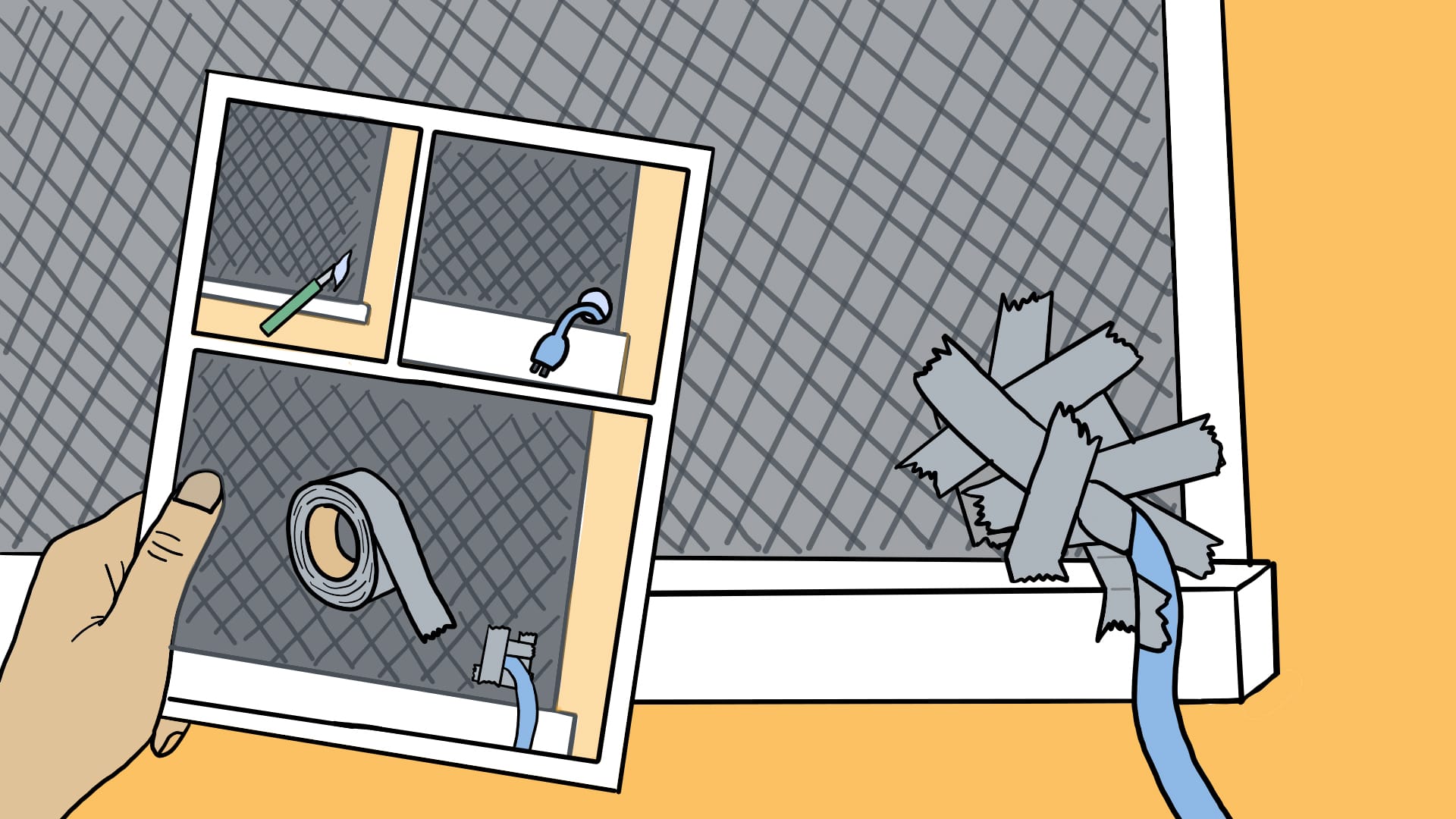
Here's what you do. Pick up a $5 window screen from Home Depot. Cut a hole in the mesh and feed the cord through. Duct tape as necessary. Put the screen in your window. Boom. Sorted.
3. There's no way fire escape solar in NYC would generate 500 megawatts
I will concede that not every apartment in NYC gets good or even palatable sunlight. Perhaps my estimate last week should have built in higher losses.
But I've got an ace up my sleeve. We still haven't talked about batteries.
Batteries can increase balcony solar capacity exponentially
Batteries and solar panels go together like Private Equity and privatizing orphanages. Or, wait, no... never mind.
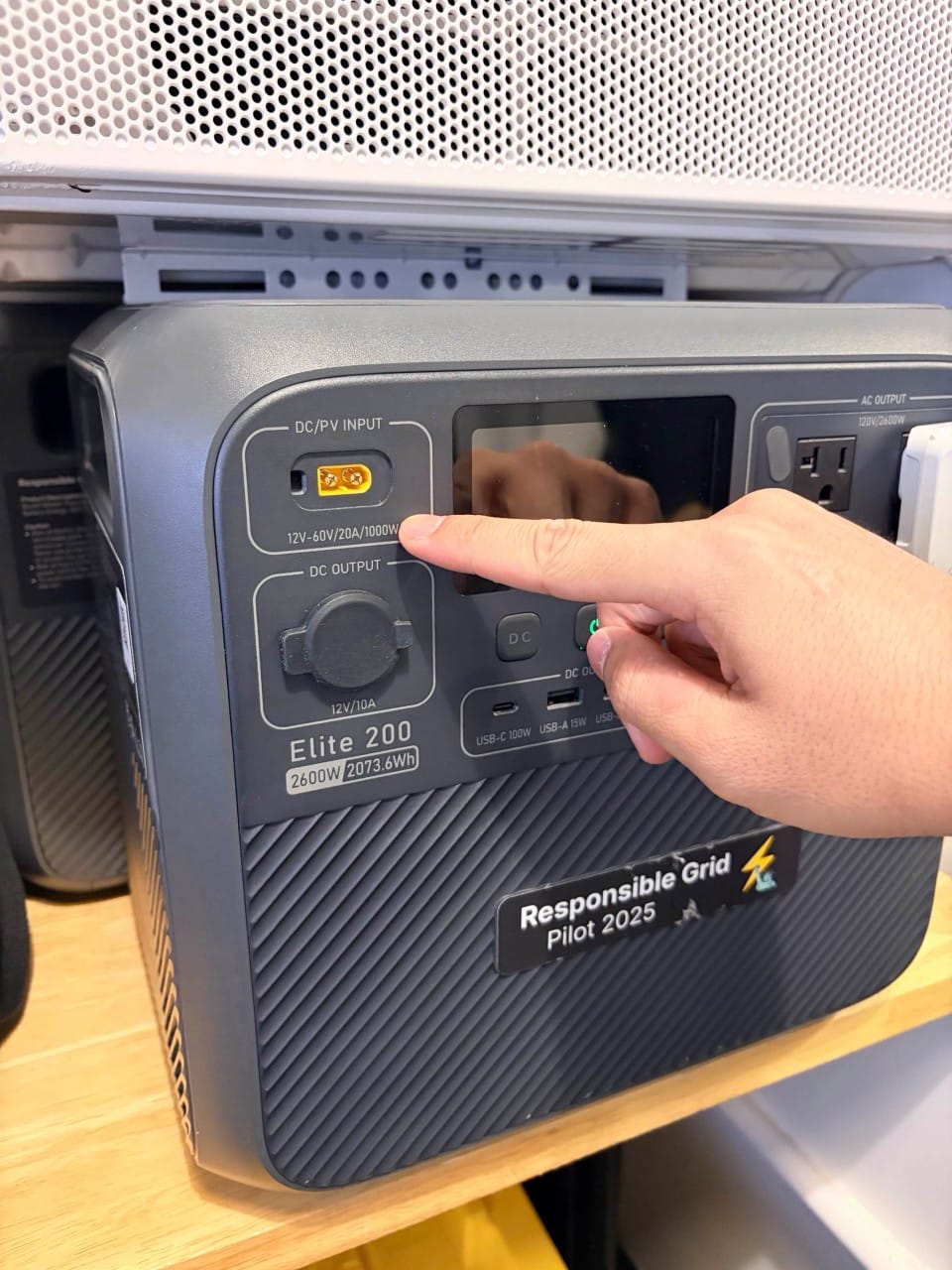
I asked Andrew Wang, whose Responsible Grid program is putting free batteries in New Yorkers' homes (join their waiting list), about how even small, 1 kilowatt-hour batteries can super-charge a balcony solar setup.
Here's what Andrew said:
Having a battery means you can soak up extra solar power without going beyond the plug-in solar circuit wattage limit [of 1,200 watts, as defined by New York's new balcony solar bill].
That unlocks more panels per apartment.
Our battery units have a max input of 1,000 watts. So in principle, you could increase a balcony solar hookup by 1,200 watts + (1,000 watts)*N, where N is the number of batteries/AC combos you have.
Basically, Andrew's saying that if you plug your balcony panels directly into a home battery, it won't count towards the 1,200 watts-per-home limit set by the bill.
So, in theory, after you plug 1,200 watts worth of panels into the wall, you could plug another, say, 3,000 watts directly into batteries—assuming you've got the space for all those panels and three 1,000 watt batteries... or two of these sleek 1.6 kWh units from Pila Energy.
Huh, that's neat. But how does it help me save money?
Let's talk savings.
400 watts of plug-in panels (one or two panels) will produce 50–70 kilowatt-hours a month, assuming they get decent sunlight.
(Need a refresher on wtf a kilowatt-hour is? Read our intro series to energy metrics here.)
If you pull up your utility bill, under the Supply Charges section you'll find the rate you pay for energy, measured in cents per kilowatt-hour (kWh).
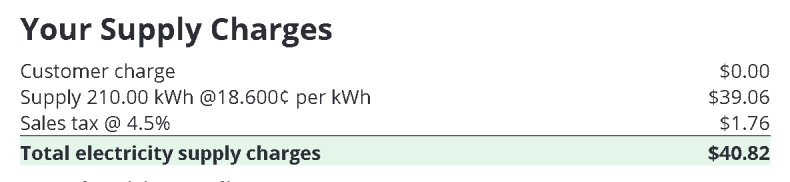
My personal rate of 18.6¢ per kWh is just slightly higher than the national average. Last month, our apartment used a total of 210 kWh.
So, if I bought 400W of balcony solar panels that offset 50–70 kWh of my overall energy use, how much would I save? We can do the math.
50 kWh x 18.6¢ = $9.30
70 kWh x 18.6¢ = $13.02
I'd likely save about $10 a month, or $120 a year.
Decent solar panels should last 25 to 30 years. That means I'd save $3,250 to $3,900 over the lifetime of the product. Subtract a few hundred bucks in upfront costs and we can reasonably assume that just 400W of plug-in panels would net me something like $3,000–$3,500 in lifetime savings.
That's assuming the rate I pay for energy stays flat over the next 30 years. If energy prices go up, which they will, I'd save even more.
How much more would you save with batteries?
This is a little trickier, because it depends on how your contract with your utility is structured. There are two ways to do it: you either pay the utility a flat, fixed rate for electricity, or if you pay dynamic, hourly prices.
Standard vs. time-of-use rates
Most folks pay a standard rate for electricity. I pay 18.6¢ per kWh every month, and that's the rate I'll pay until my contract ends.
But some people pay a fluctuating price for electricity that changes every hour of every day. This is called a time-of-use rate. When electricity is cheap, you pay next to nothing for your usage. When it's expensive, you pay out the ass.
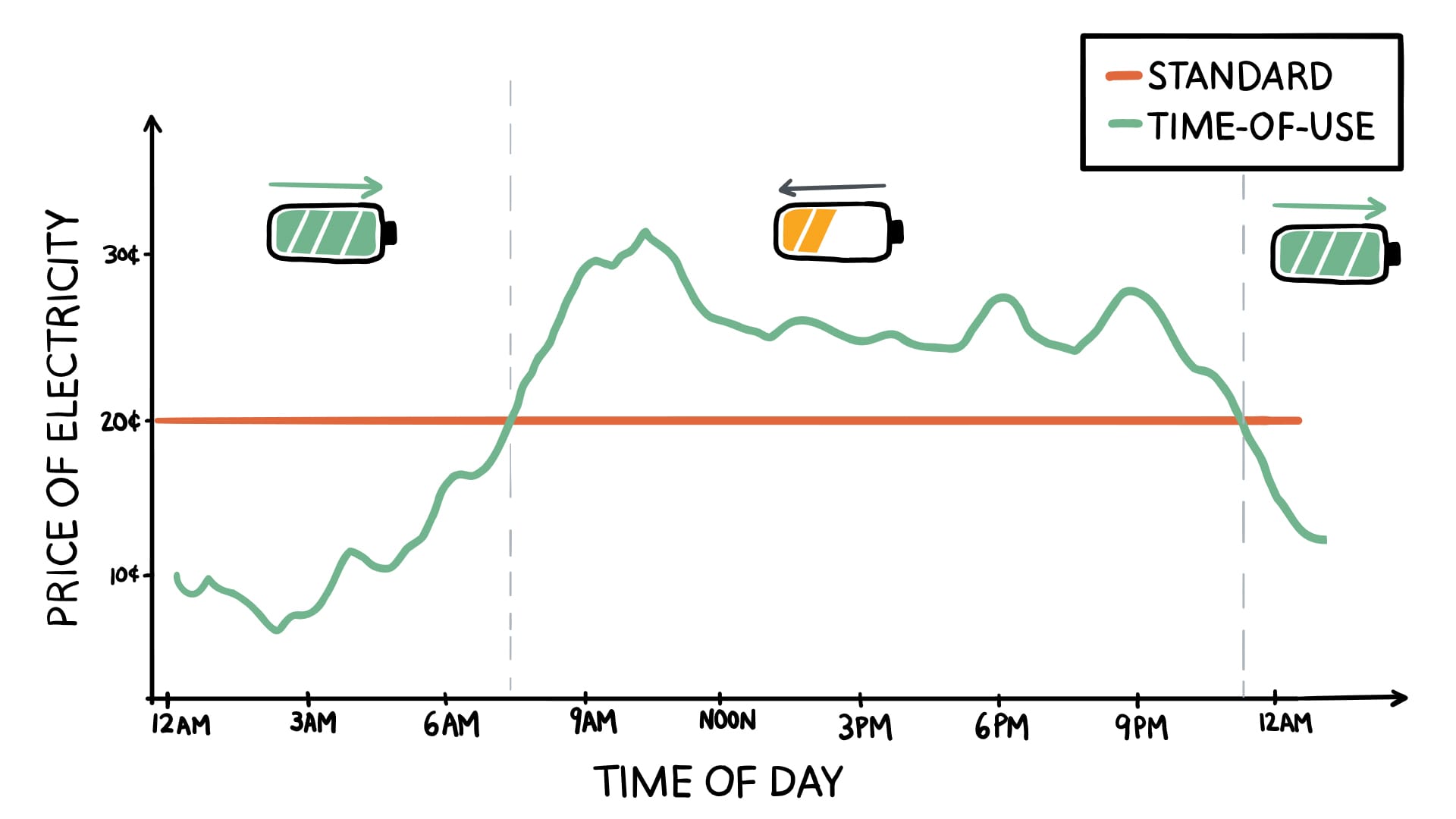
Some utilities, like Colorado's Xcel Energy, make time-of-use the default rate structure. But most places, people choose to opt into TOU rates.
Who would choose such a chaotic payment structure? People with home batteries.
A battery enables you to time shift your energy use. Charge the battery when electricity is cheap, then discharge when electricity prices climb through the roof. You can save a ton of money this way. You can even make money in some places by selling the extra electricity you produce back to the grid during those peak hours.
All of this is easier than it probably sounds. Many home batteries now come with some form of Battery Management System (BMS), which monitors energy prices, so the battery automatically knows when to charge and when to discharge. Dumber batteries can also be paired with a smart meter or a SPAN panel.
I am ready for time-of-use rates!
Congrats! If you live in New York and Con Ed is your utility company, your default plan is a standard, fixed rate. But if you want to switch, just call up Con Ed and opt into a time-of-use plan.
Whew, that was a lot! But I think I covered everything!
What about the rest of New York state, jackass?
Ack!! You're right: the SUNNY balcony solar bill absolutely applies to all of New York state.
I've been focusing on NYC for a good reason: upstate New York is already 94% powered by renewable energy. 50% from renewables, 44% from nuclear. Just 6% of the energy used upstate comes from from fossil fuels. So, adding even more solar to the mix would be stellar, but it's not an imperative the way it is downstate, where a scant 11% of our energy comes from renewables.
The SUNNY bill would bring balcony solar to the 11 million New Yorkers who don't live in the five boroughs. Lots of those folks live in buildings well-suited to plug-in solar. With a few batteries in the mix, millions of people could become energy self-sufficient. I'm excited to see what happens.
And the rest of the world?
Balcony solar is a global phenomenon!
It's trending across Western Europe.
They're talking about legalizing in the UK.
It's already permitted in India.
While I couldn't find balcony solar specifics for Latin America, small-scale solar installations are popping off, especially in Brazil.
It's an exciting time to be on team #FireEscapeSolar. But whether the SUNNY bill passes will depend on all of us. We need to be talking about it, advocating for it, and letting our elected officials know we support it.
The house may not literally be on fire. But metaphorically, it sure as hell is.


Member discussion