
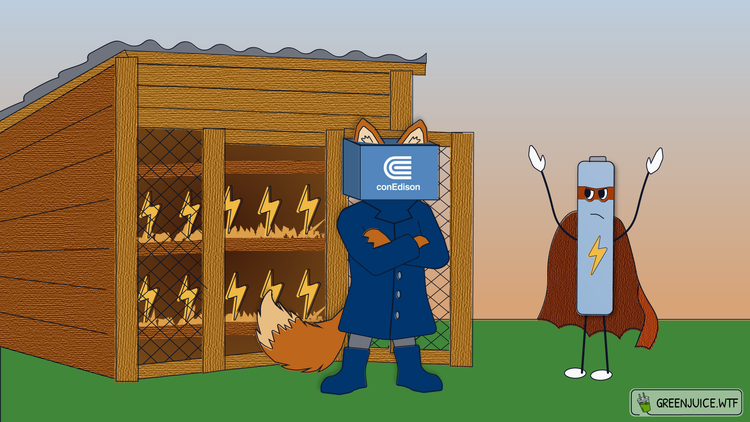
We don't have a public grid because of this guy
ICYMI, Green Juice launched a YouTube channel! Check out our first two videos and like & subscribe to help us ~juice~ the numbers :)
I've been in anaconda mode for the last two weeks slowly but surely devouring a 4.5-hour podcast on the history of the American electricity grid. It's called Stepchange: The Grid and I can't recommend it enough if you, like me, are a huge energy nerd. The podcast goes deep on not just how the grid works but why it works this way. Spoiler alert: no good reason!
I'm halfway through my second listen.
One of the podcast's main characters is a fellow named Samuel Insull, the Johnny Appleseed of electrification who'd go on to become one of the most despised tycoons in the country. His story is worth knowing, because Insull's innovations—for good and for bad—still profoundly impact our world today.
So, who was he?
Insull's insight: Utilization is everything
Insull was a Brit, the son of a lay preacher named Insull Insull (who isn't relevant to our story but that's a pretty unique name, you gotta admit). In 1881, 21 years old, Samuel moved to New York City to work for Thomas Edison as his personal secretary. Over the next decade, Insull would make a name for himself as a brilliant operator with a bright future. But when General Electric came calling with a lucrative top job offer, Insull shocked his peers by spurning GE to instead take control of a much smaller utility company, Chicago Edison.
Why decline the cushy gig at GE? Because Insull understood what nobody else did at the time: that electricity shouldn't be a luxury reserved for just the rich. Power should be as ubiquitous and cheap as water. To quote the pod—
His competitors were treating electricity like champagne, this luxury product, with luxury pricing that only the rich can have. Insull thought it should be water, something that everyone should have at the lowest possible price. And this is a real inversion of the common perspective that monopolies should charge higher prices for a luxury product. We're going to go from only J.P. Morgan having lights at his house to everyone having abundant electricity.
When Insull took over Chicago Edison, they were running their coal-fired electricity generators at just 5% capacity. They didn't have enough customers to run it more often, since electricity was so expensive that very few could afford to buy it.
Insull's key insight was to flip this notion on its head. He understood that a generator's fixed costs, i.e. building it, maintaining it, and financing it, remained the same whether he ran the generator 5% of the time or 100% of the time—which meant the more he ran the system, i.e. the higher his utilization, the cheaper every watt he produced would be.
Insull basically said, sure, y'all can keep charging an arm and a leg to light up a few mansions. But wouldn't you rather make way, way more money selling cheap electricity to millions of people?
Insull designed a flywheel around this idea that would spin and spin. It worked like this:
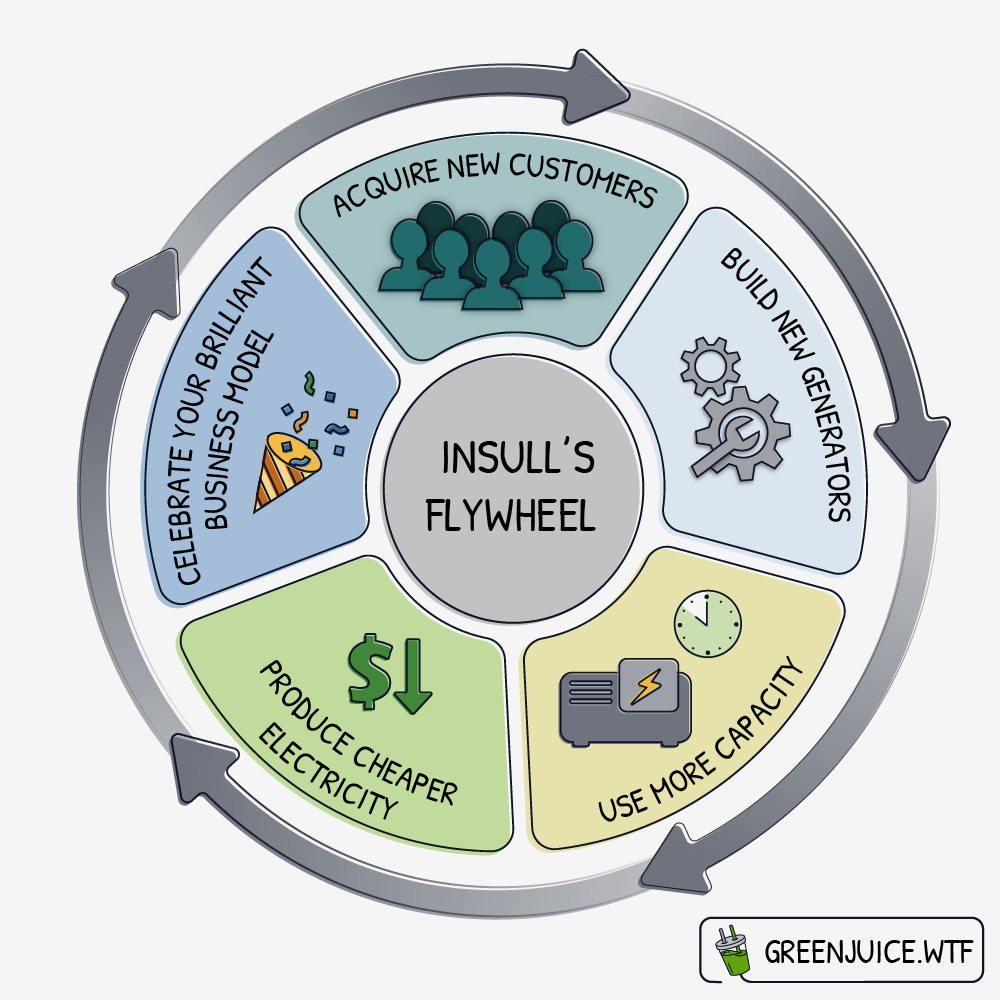
- Acquire new customers, so you can run your generators more of the time
- The more you run your generators, the cheaper it gets to produce electricity
- The lower the price of your electricity, the more customers you'll acquire
Repeat steps one through three, ad infinitum.
Insull cut electricity rates from $0.20 per kilowatt-hour down to just 2.5 cents/kWh in 12 years. He grew his customer base from 5,000 to 200,000 people. By 1913, he had a tenth of Chicago's entire population wired into his network.
The reason I'm telling you all this is because Insull's insight holds true today: the more we utilize our electricity system, the cheaper electricity becomes.
Except there's one giant caveat.
The one giant caveat
Running a generator 5% of the time vs. 100% of the time only costs the same if your fuel source is dirt cheap.
In Insull's day, coal was dirt cheap. But that is decidedly no longer the case.
- Coal is 40-50% of the cost of running a coal plant today
- Gas is 60-70%+ of the cost of running a gas plant today
Hey, but guess what?
- Sunshine and wind are 0% of the cost of running a solar farm or wind turbine today
Insull would have loved renewables. They fit his flywheel strategy perfectly.
If we adopted Insull's flywheel using renewables instead of fossil fuels, we could electrify our whole world—our homes, our transportation, our industries—and by doing so, we would continuously lower the price of electricity.
I'm gonna say that again, because to me this is the crux of why the energy transition is destined to succeed. Not because of climate change, not because it's clean. But because in a world fully powered by renewables, electricity becomes effectively free. Free "gasoline" for your EV. Free heating and cooling for your home. Fertilizer is energy-intensive to make, so costs plummet and food gets real cheap. Industries like making steel and cement become marginal. Desalinating salt water becomes affordable on a huge scale. The list goes on, and on, and on.
This is the world we could live in, and it is so much closer than most of us realize.
However, Samuel Insull's story doesn't end there.
Insull's second invention: the regulated utility monopoly
In 1905, Chicago elected a new mayor who'd campaigned on municipalizing the utilities. First, he said, he'd take over the streetcars. Next, the electric grid.
Public ownership was a threat to private profits then, just as it is now, and Insull's focus soon shifted to protecting his empire.
But rather than fight the progressives, the ingenious Insull offered them a devil's bargain. "Let my companies have exclusive territory," he said, "and in exchange, the government can regulate our rates and our profits. We will submit to public oversight! And here's the twist: we will no longer profit from the sale of electricity. Our customers will pay only what it costs us to produce or procure power, nothing more. Instead, we will earn our profits exclusively by building. New plants, new lines, new infrastructure. For every dollar of infrastructure we construct, give us a small fixed return, say 10%, as our profit. The more we build, the more we earn. And the more we build, the cheaper electricity gets for everyone."
The powers that be bought it. Insull, after all, had just cut electricity prices by nearly 90% in a dozen years. Why not let him keep cooking? What could go wrong?
Insull's idea spread. Soon, the whole country adopted his regulated monopoly model. The very same model that remains in place today, more than a hundred years later.
For most of the past century, it worked out alright. But that's all changed.
To learn how Insull ends up dying a penniless pariah in a Paris Metro station, you'll just have to listen to the Stepchange podcast.
The brutal irony of Insull's inventions
Samuel Insull discovered how to electrify the world by making energy so cheap that anyone could afford it.
But to protect his business, he struck a deal that gave private, profit-hungry utilities near-total control over our energy system.
Insull's bargain was predicated on two concessions: government regulation and a restricted profit mechanism. Both have backfired on the public spectacularly.
Regulation backfired because the utilities learned how to capture their regulators so completely that most Public Utility Commissions (PUCs) today are little more than a rubber stamp, or, to mix metaphors, a genie who grants the utility's every wish. If that sounds harsh, read this article.
Restricting profits backfired because once utilities could only profit from building new stuff, they became highly motivated to... build lots of expensive new stuff! If this business model sounds bizarre, read the Green Juice explainer.
Utilities building expensive stuff is a huge problem. They build billion dollar substations when there are many amazing, low-cost alternatives available because we—the monopolized ratepayers—pay for every penny, and the utilities get around 10% of that billion dollar price tag tacked on as profit.
But utilities building stuff isn't the only problem. They're also trying extremely hard to obstruct everybody else—private developers, homeowners, and local governments—from building really important stuff. Especially if what they're trying to build is renewable energy.
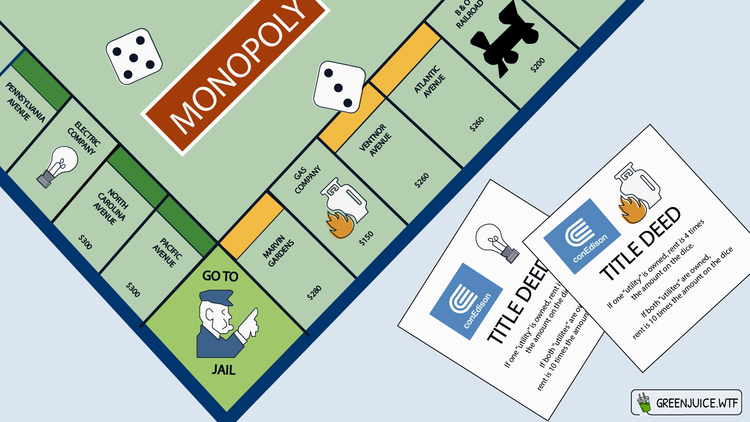
To show you exactly what I mean, we'll turn our attention to a familiar foe: the Consolidated Edison Company of New York.


Member discussion